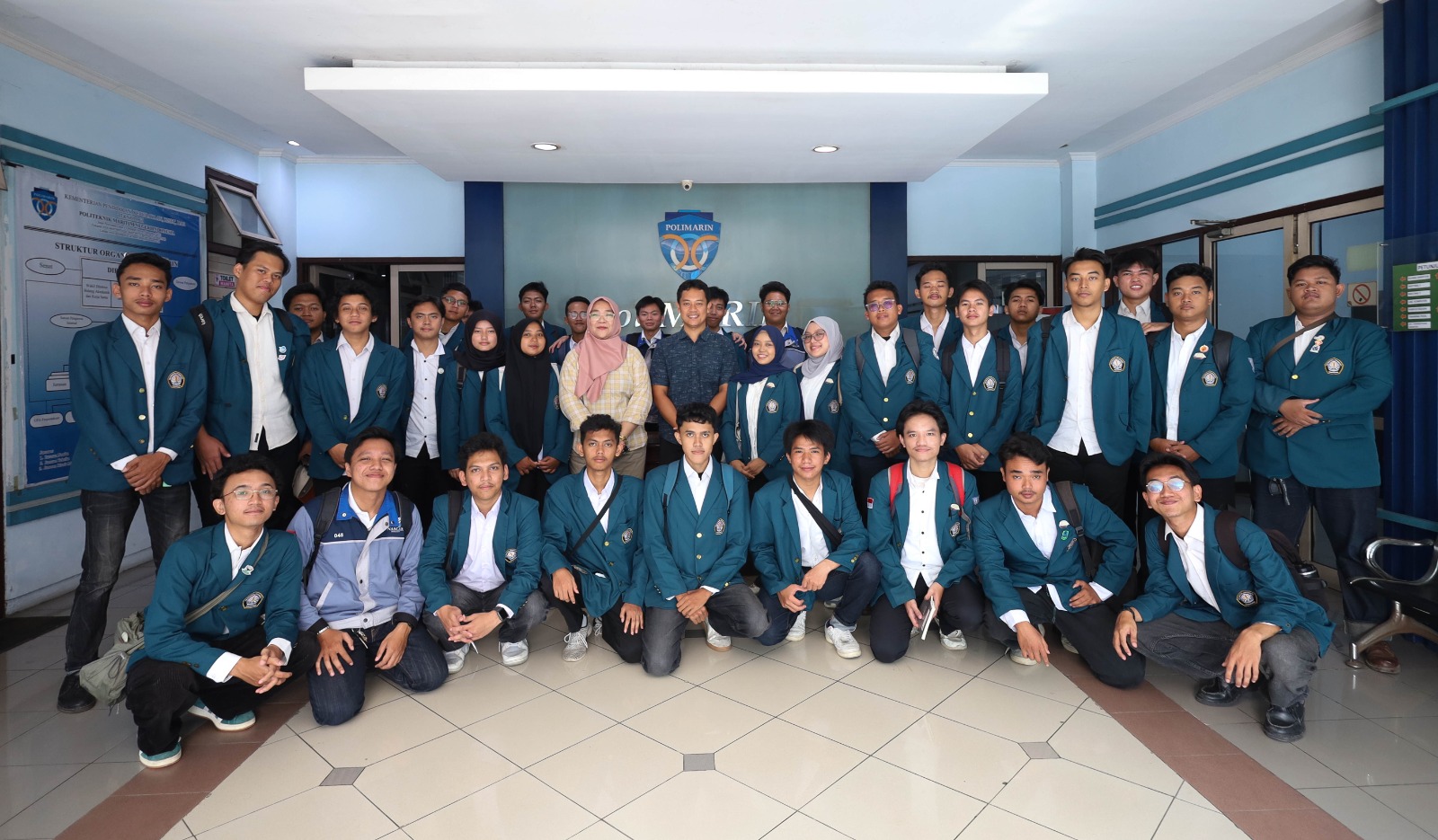
In an effort to enhance competence and practical experience in the maritime field, a total of 33 students from the Naval Architecture Engineering Technology Study Program (TRKP) participated in a field learning program focused on ship navigation and marine engineering systems. The program was held at Politeknik Maritim Negeri Indonesia (Polimarin), Semarang, Central Java.
The activity involved TRKP students from one of the polytechnics in Central Java, who demonstrated strong enthusiasm in developing their technical skills in shipbuilding and maritime operations. Throughout the program, the students were guided directly by experienced instructors from Polimarin, who specialize in maritime navigation and marine engineering. Their professional expertise provided valuable insights aligned with current industry demands.
The program was conducted on April 21–22, 2026, through a series of structured and intensive learning sessions. All activities took place at Polimarin’s advanced facilities, including the Navigation Workshop and Marine Engineering Laboratory, which are equipped with modern, industry-standard equipment.
This program aimed to strengthen students’ understanding of practical aspects that are often predominantly taught theoretically in the classroom. Through direct, hands-on learning, students were able to bridge the gap between theory and real-world application, gaining a more comprehensive understanding of ship operations.
In addition, the program serves as a strategic initiative to improve the quality of graduates, ensuring they are better prepared to face the challenges of the professional world. The shipbuilding and maritime industries require not only theoretical knowledge but also strong technical skills. Therefore, practical experience such as this plays a crucial role in shaping competent, adaptive, and professional graduates.
The learning method applied in this program was hands-on practice, allowing students to actively engage in each session. During the navigation sessions, students conducted simulations using electronic navigation systems in a simulator room. They learned essential skills such as position fixing, chart reading, radar operation, and the use of modern navigation equipment.
Meanwhile, in the engineering sessions, students were introduced to the main components of ship machinery systems, including main engines and auxiliary engines. They also studied the working principles, basic maintenance procedures, and simple troubleshooting commonly encountered in ship operations. This provided them with a deeper understanding of how integrated machinery systems function onboard.
Each session concluded with technical discussions and case studies designed to enhance students’ analytical thinking and problem-solving skills. During these discussions, students were encouraged to share their ideas, ask questions, and explore real-world challenges encountered in maritime operations.
Through this program, TRKP students are expected not only to gain additional knowledge but also to acquire valuable practical experience that will serve as a strong foundation for their future careers. Such field learning activities are also expected to be carried out continuously as part of efforts to improve the quality of vocational education in the maritime sector.
With strong collaboration between educational institutions and training centers such as Polimarin, it is hoped that graduates will not only excel academically but also possess the practical competencies needed to compete in the maritime industry, both nationally and internationally.