

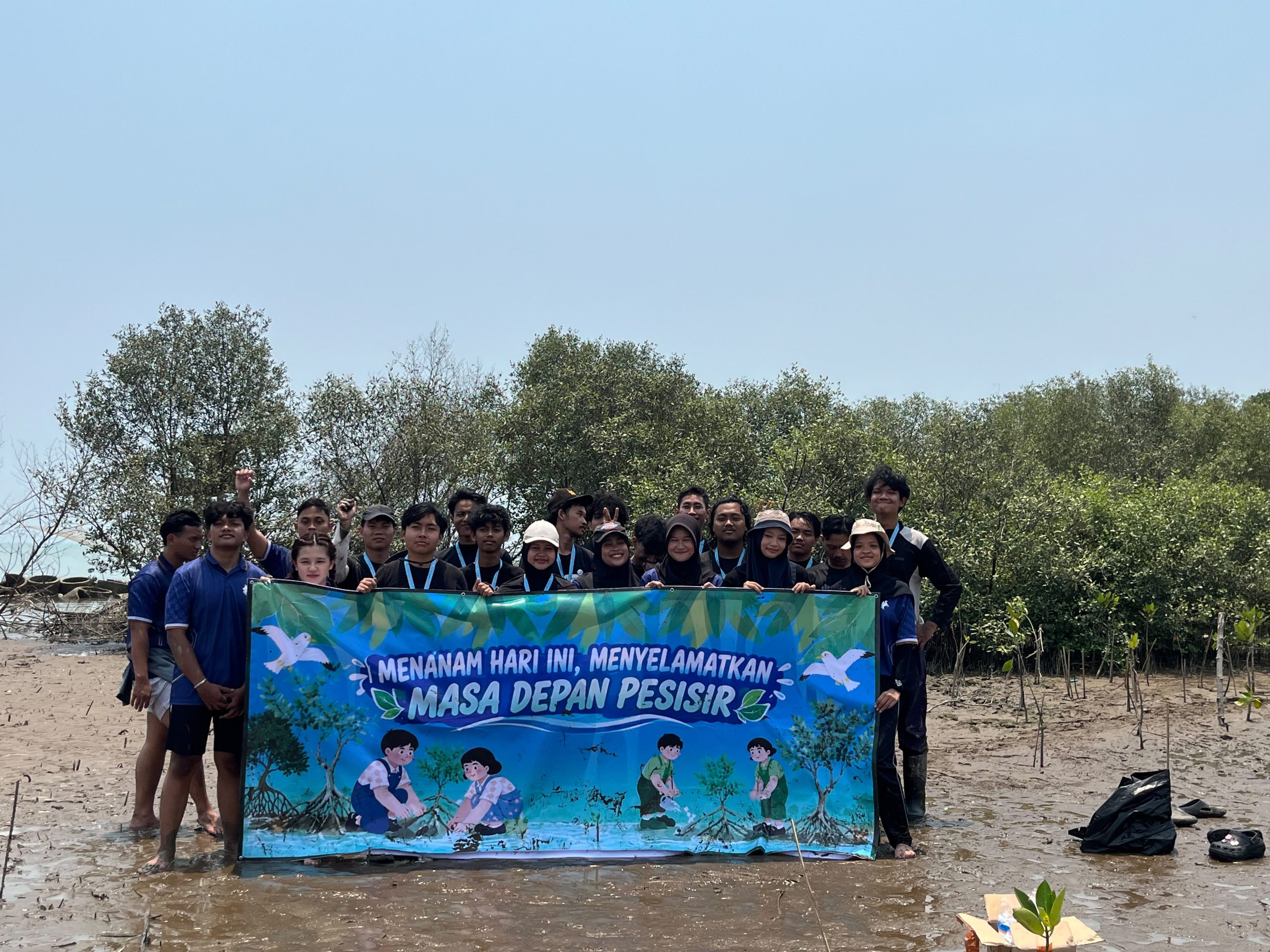
Students from the Shipbuilding Engineering Technology Program at the Vocational School of Diponegoro University held a community service activity titled “Mangrove Planting for Coastal Ecosystem Rehabilitation and Erosion Reduction in Timbulsloko Village.” This activity involved planting 1,000 mangrove seedlings in the coastal area of Timbulsloko Village, Sayung Subdistrict, Demak Regency, Central Java, as a concrete effort to preserve the coastal environment.
This event took place on Saturday, October 19, 2026, from 9:00 a.m. to 12:30 p.m. WIB and was attended by 46 students, as well as residents of Timbulsloko Village who actively participated. Timbulsloko Village is a coastal area in Demak Regency that has long faced issues of coastal erosion and tidal flooding due to rising sea levels. These conditions have led to the degradation of the coastal area, the erosion of land, and disruptions to the community’s daily activities and livelihoods. In light of these conditions, the students felt the need to contribute through concrete and sustainable actions, one of which was planting mangroves.
Mangroves were chosen because they play a vital role as natural wave barriers that can dampen wave energy and help reduce the rate of coastal erosion. Mangrove roots also serve to trap mud and sediment, thereby helping to maintain the stability of the shoreline. In addition, mangrove ecosystems provide a habitat for various marine species such as fish, shrimp, and crabs, thereby supporting the livelihoods of coastal communities.
This initiative represents a tangible contribution by students toward achieving the Sustainable Development Goals (SDGs), particularly in addressing climate change (Climate Action), preserving marine ecosystems (Life Below Water), and terrestrial ecosystems (Life on Land). Furthermore, this initiative aligns with the spirit of “Partnerships for the Goals” through collaboration between universities and the community.
The series of activities began with an opening ceremony, welcoming remarks, and a brief orientation. During this session, the students presented educational material on the ecological and economic benefits of mangroves, proper planting techniques, and the importance of caring for the seedlings after planting. The material was presented in a simple and engaging manner to ensure it was easily understood by all participants.
Following the educational session, the activity continued with a collaborative mangrove seedling planting effort. The students traveled together to the planting site, then planted the seedlings one by one at designated spots, taking into account planting distances and soil conditions. The planting process took place with great enthusiasm and a spirit of togetherness, despite the muddy field conditions and the scorching sun.
As students in the field of naval architecture and maritime studies, this activity holds special significance because it fosters a sense of responsibility toward the conservation of the ocean and coastal areas—topics closely related to the academic discipline they are studying. Students are expected not only to excel technically but also to demonstrate social awareness and environmental responsibility.
Through this activity, it is hoped that the coastal ecosystem of Timbulsloko Village can gradually recover and that the community will become increasingly aware of the importance of preserving mangrove areas as a natural barrier against the threats of coastal erosion and tidal flooding. This program also serves as tangible evidence of the synergy between the education sector and coastal communities in supporting sustainable development, thereby creating a sustainable coastal environment that is resilient to climate change.